
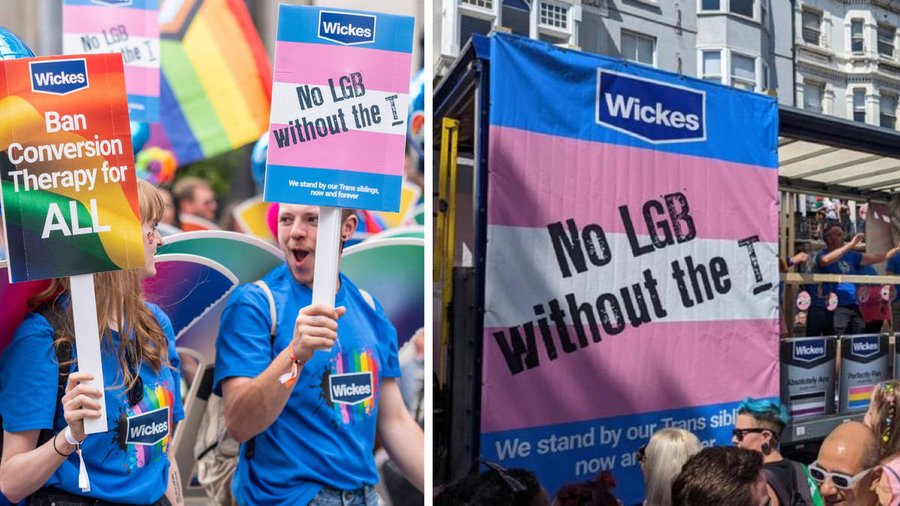
Oops. Isn’t it fun when virtue-signalling companies find themselves on the wrong side of the culture war?
For years, we’ve seen Twitter storms (usually led by far-left activists), attempt to destroy companies for not promoting strongly enough what they see as ‘social justice’ causes.
Take the group ‘Stop Funding Hate’ who, according to their website, exist to ‘make hate unprofitable’. Their tactic is to persuade advertisers to pull their support from publications and broadcasters that, in their words, ‘spread hate and division’.
One of the ways they do this is by galvanising mobs of social media users to shame advertisers into boycotting channels and newspapers they don’t like (think GB News, the Daily Mail, The Sun etc). Essentially, they try to make it socially unacceptable for mainstream brands to promote their products on media outlets they don’t approve of.
These types of campaigns have traditionally been orchestrated by left-wingers targeting ‘right-wing’ media, and they can be frustratingly effective.
My former colleague Kristian Niemietz used to say (if i remember correctly) that “go woke, go broke” was rather wishful thinking. He said most small c conservatives (or anyone really who doesn’t subscribe to the ideology of woke) simply don’t care enough to boycott say, ice cream brand Ben & Jerry’s, because they disagree with the company’s advocacy for open borders, for example.
He also said that these businesses have clearly made a calculation that they’ll gain more from their online virtue signalling (because Twitter is dominated by keyboard social justice warriors) than they’ll lose from the odd gammon deciding they’ll never buy a tub of Caramel Chew Chew again.
However, it seems #GoWokeGoBroke may actually be coming true.
Bud Light is the most striking example. They made the most epic business mistake, choosing to partner with and promote Dylan Mulvaney, who from what I can see was a very average actor, who managed to reignite their career by cosplaying as the most ridiculous (and offensive) stereotype of a woman possible for clicks.
After a conservative-led boycott (!) the company has now lost its position as the best-selling beer in the US, with sales in the week ending June 3rd down down 24.4% compared to a year ago. Awkward.
Over here, the boss of DIY shop Wickes decided to launch his company into a self-made PR crisis by labelling anyone who disagrees with him on trans issues as “bigots” and by claiming that 90 per cent of the population are “just slightly ignorant”.
Funnily enough, the very many people who have transcritical views and believe in sex-based rights are not amused. And #boycottWickes has since been trending and its share price has tumbled.
So, there you go. Companies are finding out the hard way that woke may actually leave you broke – or at least leave you with a bit of an unecessary headache.
As a final point, I’m not saying business people should censor themselves, or that they have no right to speak up on whatever social issue they fancy, but I can’t help but enjoy it when it goes ever so slightly tits up.